
Running an online store in India has never been more competitive. With thousands of new e-commerce businesses launching every month—from niche D2C brands in Jaipur to multi-category retailers in Mumbai standing out on Google is no longer optional. It is a survival necessity.
Yet, most e-commerce store owners face the same frustrating challenge: they invest in a beautiful website, stock great products, and even run paid ads, but organic traffic remains disappointingly low. The missing piece? A well-crafted e-commerce SEO strategy.
In this guide, we break down actionable, practical methods to help your online store rank higher, attract the right audience, and convert visitors into paying customers. Whether you are just starting out or looking to scale, these strategies will give you a clear roadmap to sustainable organic growth.
Paid advertising delivers quick wins, but the moment you stop spending, the traffic disappears. SEO, on the other hand, builds compounding value over time. Consider this: studies show that over 53% of all website traffic comes from organic search. For e-commerce businesses, ranking on the first page of Google for buyer-intent keywords can mean the difference between struggling for sales and achieving consistent revenue growth.
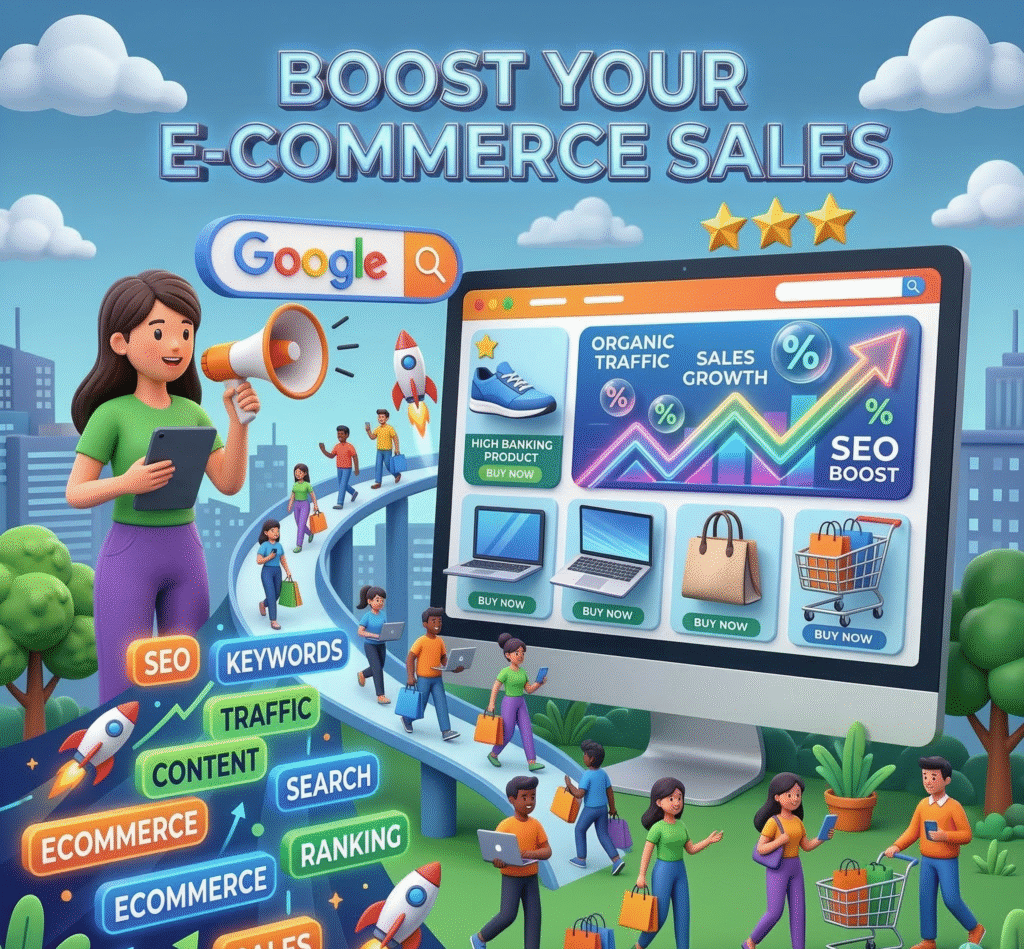
For Indian businesses targeting local and national audiences, a strong e-commerce SEO strategy allows you to compete against larger brands without unlimited advertising budgets. It levels the playing field if you do it right.
The first step in any successful e-commerce SEO strategy is to know exactly what your potential customers are looking for. A lot of people search for broad keywords like “buy shoes,” but they are very competitive and hard to rank for. Instead, companies should use long-tail, intent-driven keywords that show a strong desire to buy. A search like “best cotton kurtas for women under 1000” shows that the person is very close to making a purchase.
Tools like Google Keyword Planner, Ahrefs, and Semrush can be very helpful for finding these kinds of keywords. These platforms help you find keywords that people who want to buy something are looking for and that aren’t too hard to compete with. It’s also important to use a mix of keywords that are specific to your products, keywords that are general to your category, and questions that are meant to give information. Once you know what these keywords are, you should carefully place them on product pages, category pages, and blog posts to avoid keyword cannibalization and make sure that each page targets a different search term.
The pages for products and categories are what make money for any e-commerce site. Not only do these pages need to be optimized for search engines, but they also need to be optimized for real people who are thinking about buying something. Optimizing your pages correctly can help search engines find you more easily and make shopping easier
Title tags, meta descriptions, product descriptions, image alt text, and URL structure are all important things to optimize. The main keyword should be included in title tags and meta descriptions in a way that makes people want to click on the search result. It is important to write unique and informative product descriptions instead of copying them from the manufacturer’s descriptions. This is because duplicate content can hurt SEO performance. Alt text that describes the images should be included so that search engines can understand what they are. Also, URLs should stay simple, clean, and focused on keywords so that both people and search engines can understand them more easily.
Technical SEO is what makes an e-commerce website work well. Search engines may not be able to crawl and index your pages correctly, even if your content and keywords are well-optimized. Many e-commerce sites have trouble with these kinds of things because they have a lot of products, dynamic filters, and complicated website structures.
Site speed, mobile responsiveness, canonical tags, XML sitemaps, robots.txt files, and structured data are some of the most important technical areas that need work. A website that takes a long time to load can have a big effect on both user experience and conversion rates. It’s also important to make sure your website works well on mobile devices, since a lot of e-commerce traffic comes from mobile devices. Canonical tags help keep filtered product pages from causing problems with duplicate content. XML sitemaps and robots.txt files help search engines find and index important pages. Adding schema markup to products can also improve search results by showing information like prices, ratings, and availability right in the search results.
Content marketing is one of the best parts of an e-commerce SEO strategy, but many people don’t use it enough. Not only does high-quality content bring in potential customers, but it also helps your brand become more authoritative and easier to find in search engines. Businesses can reach people who are still looking into products and weighing their options before making a purchase with informational content.
Businesses can make different kinds of content to get people to visit their sites, such as buying guides, product tutorials, comparison articles, and content for seasonal shopping. For instance, posts that compare products or list the “10 Best Air Purifiers for Indian Homes Under ₹10,000” help people look at different options and gently steer them toward your products. Seasonal content about big sales events or holidays like Diwali can also get a lot of search traffic. When this content is linked to relevant product and category pages on the same site, it creates a strong ecosystem that keeps visitors interested and tells search engines that the site is relevant.
Backlinks are still one of the most important things that search engines look at when deciding how to rank a page. When other trustworthy websites link to your store, it tells search engines that your site is reliable and trustworthy. E-commerce companies need a well-planned outreach and partnership strategy to get high-quality backlinks.
Working with lifestyle bloggers, product reviewers, and influencers who can show off your products and link to your website is one good way to do this. To get more exposure and links that are trustworthy, businesses can also get listed on well-known shopping directories and product comparison sites. Another effective way is to make useful resources like infographics, product size guides, or industry reports that other websites will naturally want to link to. Guest posting on relevant industry blogs also lets businesses share their knowledge and get contextual backlinks that boost their domain authority and search rankings.
An effective e-commerce SEO strategy is never set-and-forget. Use Google Search Console and Google Analytics 4 to monitor key metrics: organic traffic, keyword rankings, bounce rate, conversion rate, and revenue from organic search. Review your data monthly and adjust your approach based on what is working.
Our digital marketing packages at Just Web Infotech include dedicated monthly SEO reporting, so you always have a transparent view of your campaign performance and return on investment.
The best way to spend money on your online store’s long-term growth is to have a good e-commerce SEO strategy. All the pieces of the puzzle work together to create long-lasting, growing traffic. These pieces include technical foundations, on-page optimization, content marketing, and link building.
We at Just Web Infotech help Indian e-commerce businesses get the most out of organic search. Our team of SEO experts, content strategists, and web developers work together to get you measurable results, like more traffic, more qualified leads, and more sales.
An e-commerce SEO strategy is a plan for making your online store better so that it shows up higher in search engine results for keywords that are important to your business. It matters because organic search is one of the best ways for e-commerce businesses to get customers to buy things. It brings in sales without the need for constant advertising.
SEO is something you should do for a long time. Most online stores start to see real changes in their rankings and organic traffic within three to six months of regularly optimizing their sites. It may take longer in more competitive niches, but the results last and get better over time.
E-commerce SEO means making thousands of product and category pages better, dealing with duplicate content from different versions of the same product, using product schema markup, and focusing on very specific buyer-intent keywords. It is more difficult from a technical point of view than regular website SEO and needs a professional touch.
Of course. SEO is actually most helpful for small businesses because they can target niche, local keywords with less competition. Small Indian businesses can get very relevant traffic and compete with bigger brands without spending crores on advertising if they have a good e-commerce SEO strategy.
Just Web Infotech provides full e-commerce SEO services, such as technical SEO audits, on-page optimization, keyword research, content strategy, link building, and monthly performance reports. We also offer website development, digital marketing packages, and personalized growth solutions that are perfect for Indian e-commerce businesses of all sizes.